𝐋𝐍𝐆 𝐢𝐬 𝐨𝐧 𝐭𝐡𝐞 𝐫𝐢𝐬𝐞. 𝐁𝐮𝐭 𝐚𝐫𝐞 𝐰𝐞 𝐥𝐨𝐨𝐤𝐢𝐧𝐠 𝐜𝐥𝐨𝐬𝐞𝐥𝐲 𝐞𝐧𝐨𝐮𝐠𝐡 𝐚𝐭 𝐢𝐭𝐬 𝐜𝐥𝐢𝐦𝐚𝐭𝐞 𝐫𝐢𝐬𝐤𝐬?
Most people don’t read scientific reports. They learn about climate solutions through the news. What the media choose to highlight, and what they don’t, helps shape the public and political agenda.
We analysed how LNG has been covered in Dutch media since 1991. And we took a closer look at its use as a marine fuel.
What we found:
➡️ The environmental impact of LNG received remarkably little attention: 𝐨𝐧𝐥𝐲 14% 𝐨𝐟 𝐚𝐫𝐭𝐢𝐜𝐥𝐞𝐬 𝐦𝐞𝐧𝐭𝐢𝐨𝐧𝐞𝐝 𝐞𝐧𝐯𝐢𝐫𝐨𝐧𝐦𝐞𝐧𝐭𝐚𝐥 𝐨𝐫 𝐜𝐥𝐢𝐦𝐚𝐭𝐞 𝐚𝐬𝐩𝐞𝐜𝐭𝐬.
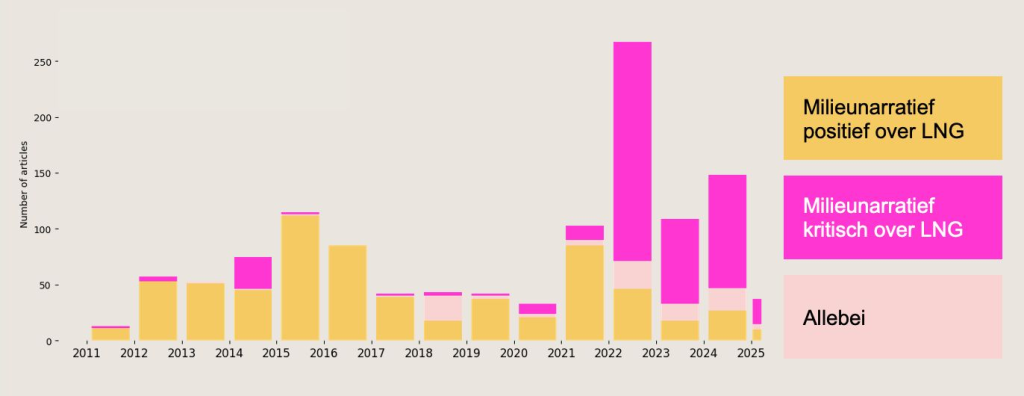
➡️ Of those articles, 𝐬𝐨𝐦𝐞 𝐨𝐧𝐥𝐲 𝐦𝐞𝐧𝐭𝐢𝐨𝐧 𝐭𝐡𝐞 𝐞𝐧𝐯𝐢𝐫𝐨𝐧𝐦𝐞𝐧𝐭𝐚𝐥 𝐛𝐞𝐧𝐞𝐟𝐢𝐭𝐬 𝐨𝐟 𝐋𝐍𝐆, 𝐝𝐞𝐬𝐩𝐢𝐭𝐞 𝐢𝐭𝐬 𝐯𝐞𝐫𝐲 𝐬𝐢𝐠𝐧𝐢𝐟𝐢𝐜𝐚𝐧𝐭 𝐜𝐥𝐢𝐦𝐚𝐭𝐞 𝐢𝐦𝐩𝐚𝐜𝐭 (though coverage has recently become more balanced and critical – graph 1). This is especially true for LNG as marine fuel: two-thirds of such articles contain only positive environmental narratives over the whole reporting period.
➡️ Framing of LNG (in all its applications) as a “𝐭𝐫𝐚𝐧𝐬𝐢𝐭𝐢𝐨𝐧 𝐟𝐮𝐞𝐥” to lower-carbon energy is still more prevalent than narratives around lock-in or the difficulty of repurposing LNG-infrastructure for renewables.
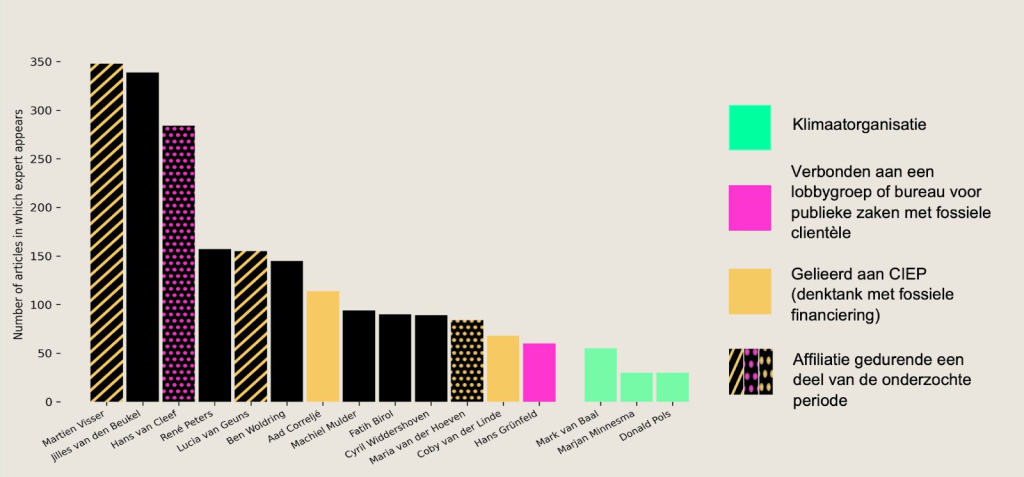
➡️ 𝐀𝐧𝐝 𝐩𝐞𝐫𝐡𝐚𝐩𝐬 𝐦𝐨𝐬𝐭 𝐬𝐭𝐫𝐢𝐤𝐢𝐧𝐠: 𝐚 𝐬𝐦𝐚𝐥𝐥 𝐠𝐫𝐨𝐮𝐩 𝐨𝐟 𝐞𝐱𝐩𝐞𝐫𝐭𝐬, some with ties to the fossil fuel industry, are dominant in the debate (graph 2)
> The three most cited experts appeared in over 250 news articles: far more than experts from environmental organisations.
> Expertise on economy, trade and markets is more frequently consulted compared to climate impact, community effects or fossil lock-in risks.
> Fossil-fuel affiliations are often not disclosed.
This creates a risk of a one-dimensional public debate on LNG.
Our research underscores the crucial role journalists and news media can play in covering the climate and energy transition: fact-checking claims, amplifying independent and critical voices, and bringing both impacts and alternatives into the conversation.
👉 Research paper (pre-print), with a detailed explanation of the research method and outcomes
👉Article by Bart Crezee on Momus (in Dutch)
👉Recording of the public event with a journalist panel at Pakhuis de Zwijger (in Dutch)
👉Interview with Aaron and Lynn by Pakhuis de Zwijger (in Dutch)
Research by Aaron Pereira, Lynn Vanheule & Chris Julien.